Case study · 7 min read
A Cipher Without a Name: The Zodiac’s Decoded 340-Character Message
In December 2020, private codebreakers solved a Zodiac cipher that had resisted interpretation for 51 years, and the FBI authenticated their solution. The words became readable; the killer’s identity did not—and that distinction remains the central discipline of this cold case.
I. The Scene & The Anomaly
The Zodiac case has two overlapping scenes: the Northern California attacks and the public arena in which correspondence attributed to their perpetrator became an enduring spectacle. One concerns victims, survivors and criminal responsibility. The other concerns messages, interpretation and the dangerous attraction of a seemingly complete explanation.
The reviewed record identifies the attacks involving David Faraday, Betty Lou Jensen, Darlene Ferrin, Michael Mageau, Cecelia Shepard, Bryan Hartnell and Paul Stine as the confirmed Northern California series. Yet the investigative paperwork does not culminate in a defendant. No verified indictment, complaint, information or other charging document for those attacks was found in the reviewed indexes.

Darlene Ferrin, Zodiac victim portrait · · Publication rights need review
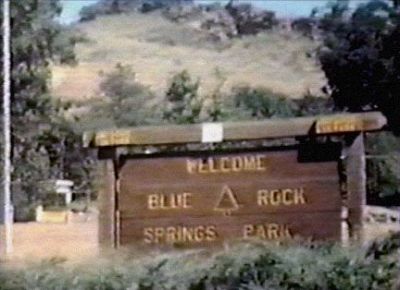
Blue Rock Springs Park scene photograph · · Publication rights need review
That is the anomaly beneath the notoriety. A case can possess an extensive documentary history, a recognizable public identity and a solved cryptogram without possessing a legally established perpetrator.
The clearest example arrived in December 2020. An international team of private codebreakers solved the 340-character cipher sent in November 1969. The FBI publicly confirmed the solution. But the decoded message did not materially advance identification of the killer.
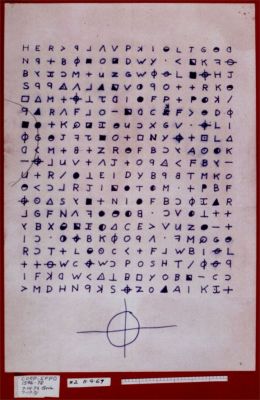
Zodiac 340 cipher letter, November 8 1969 · · Publication rights need review
The dates establish a genuine achievement: 51 years between transmission and solution. They do not establish a corresponding advance toward prosecution. Reading the message and identifying its author were separate investigative problems. Only the first was demonstrably resolved.
II. The Suspect Matrix & The Alibis
A responsible suspect matrix begins with the quality of a proposed connection, not the familiarity of a name. Does the available material document an investigative interest, a private accusation, an evidentiary association or a legal finding? Those categories cannot be exchanged merely because a theory has attracted attention.
The supplied confirmed record contains one particularly instructive collision between public accusation and official status. In 2021, the private Case Breakers group publicly identified Gary Francis Poste as the Zodiac. In October of that year, the FBI’s San Francisco office stated that the investigation “remains open and unsolved.”
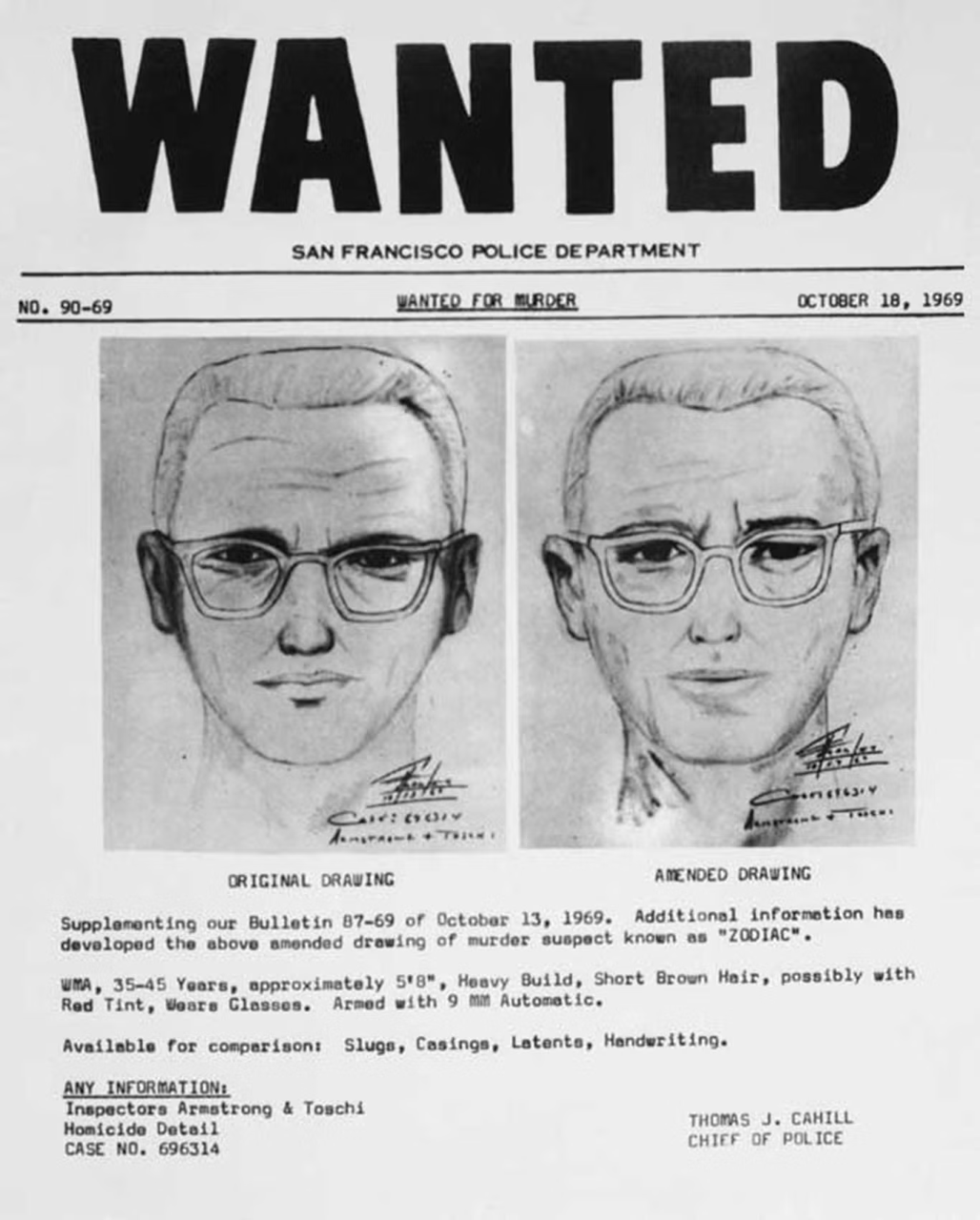
Zodiac Killer SFPD wanted poster, October 1969 ·
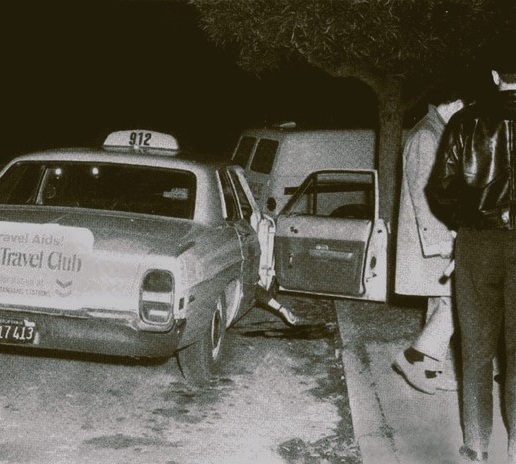
Paul Stine crime scene, Washington and Cherry ·
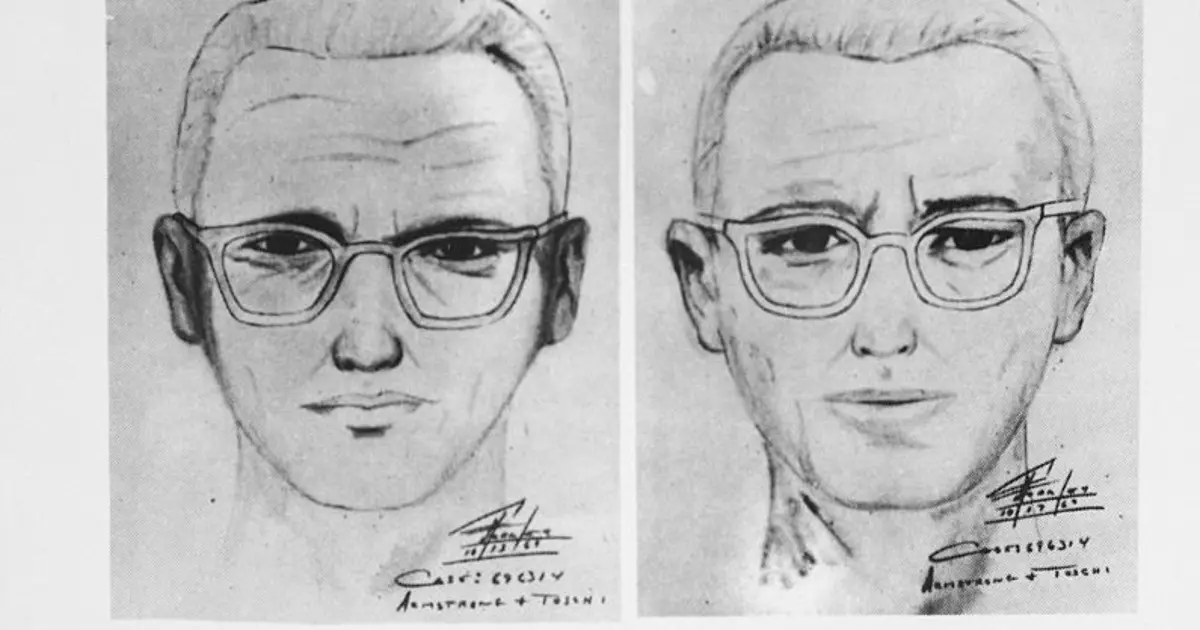
Zodiac suspect composite sketch, 1969 · · Publication rights need review
The juxtaposition matters. The private identification was a claim, not an official resolution. The FBI’s statement did not establish an alternative offender or disclose a complete assessment of every allegation. It preserved the case’s unresolved status.
Nor does the supplied material provide a documented alibi assessment for Poste or any other proposed suspect. There are no confirmed interview transcripts, movements, witness confrontations or exclusion results here from which to construct one. An investigator cannot fill that column with inference and then call the matrix complete.
The proper entry remains narrow: a publicly advanced identification, followed by an official statement that the case was still unsolved. Nothing supplied establishes that the claim produced an arrest, charge or judicial finding.
III. The Evidence Ledger
Exhibit A — The 340-Character Cipher
Type and documented origin: A cryptographic communication sent by the Zodiac in November 1969. The supplied confirmed facts establish its transmission and eventual solution, but do not specify a recovery location, physical examination history or complete chain of custody.
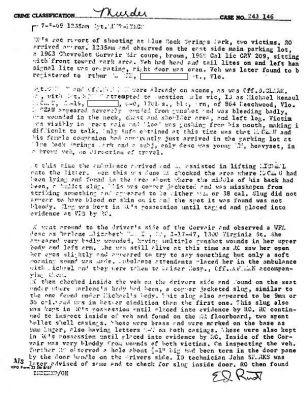
Blue Rock Springs Park evidence photograph · · Publication rights need review
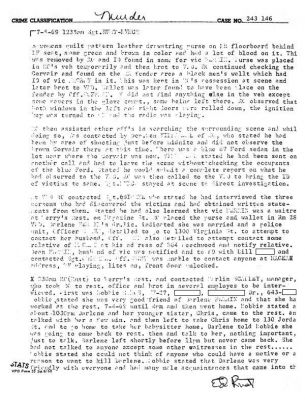
Blue Rock Springs Park evidence photograph · · Publication rights need review
Initial interpretation: Until its solution, the cipher presented an unread message. Its possible evidentiary value lay in what its concealed content might reveal. That possibility must not be retrospectively converted into a promise that the text contained a name or an identifying confession.
What analysis revealed: In December 2020, an international team of private codebreakers produced a solution that the FBI authenticated. The decoded language included the writer’s claim that he did not fear the gas chamber because it would send him to paradise sooner. It also referred to having enough “slaves” to work for him.
Those statements reinforced impressions of a theatrical, self-invented ideology involving death and an afterlife. They disclosed the persona presented in the message. They did not establish a legally or medically verified motive for the killings.
Evidentiary limit: Authentication of a cryptographic solution validates the reading of the text; it does not automatically validate the writer’s claims within it. More decisively, the FBI reported that the solution yielded no new leads toward the killer’s identity. The exhibit became more intelligible without becoming demonstrably more identifying.
Exhibit B — The Investigative Record and Charging-Document Search
Type and documented location: Documentary records available through the reviewed police-report and FBI-file indexes, together with the FBI’s public Zodiac Vault material. These are investigative and archival records, not a physical object recovered from a crime scene.
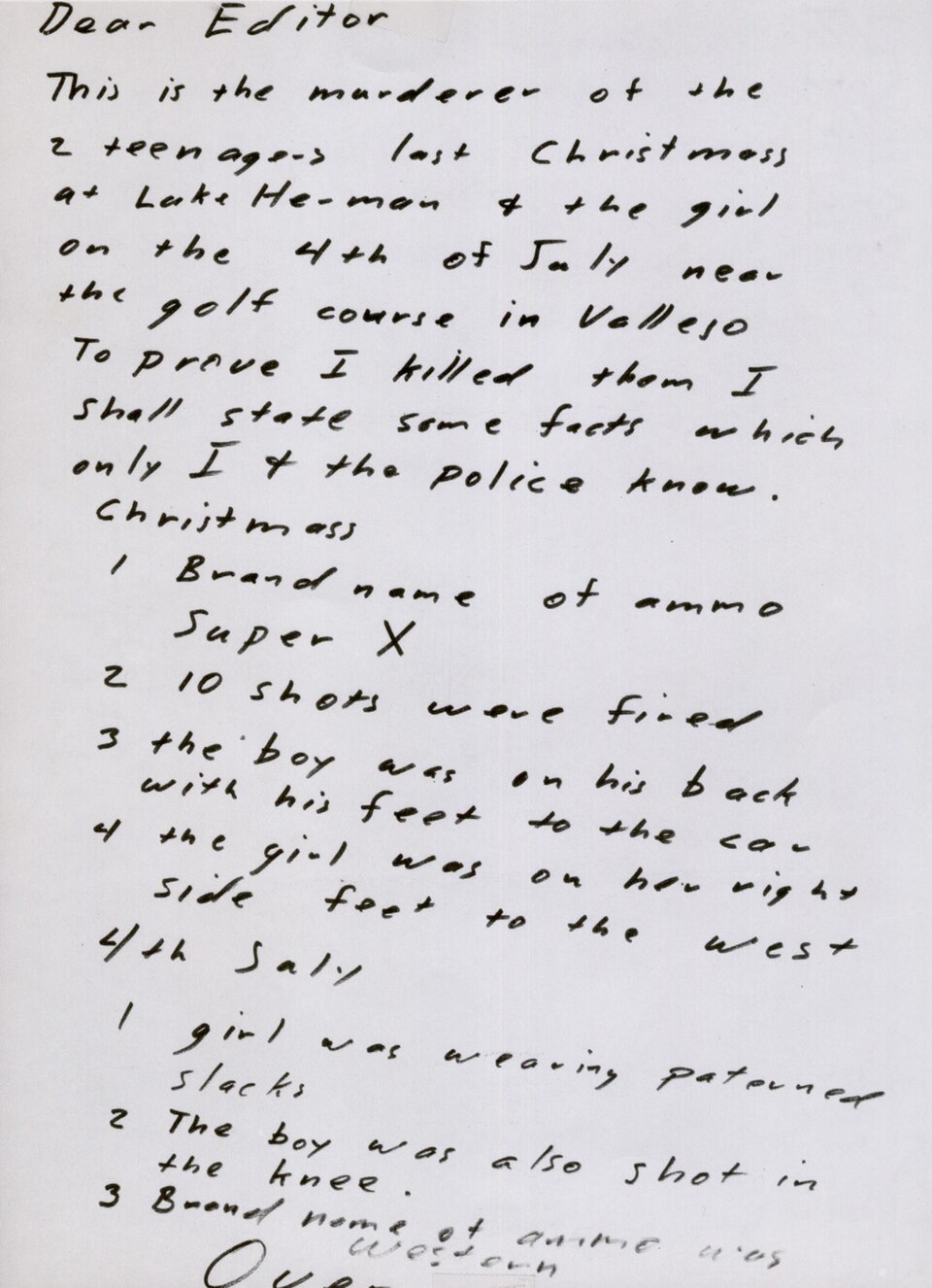
zodiac july 31 1969 letter page 1 ·
Initial interpretation: Their existence establishes that the case generated official documentation across the investigative record. The FBI material confirms its treatment as a violent-crime investigation.
What review revealed: No verified court docket entries or charging documents against a defendant for the confirmed Northern California attacks were found in the reviewed indexes. The FBI Vault material likewise does not show a named suspect charged with a Zodiac crime.
Evidentiary limit: A search of available records is not omniscience. It cannot expose every investigative judgment or undisclosed lead. Its conclusion should remain bounded by what was reviewed. Here, however, that documentary absence is consistent with the authorities’ repeated public description of the case as open and unsolved.
These two exhibits answer different questions. The cipher establishes readable content. The records establish documented investigative and legal status. Neither supplies the missing attribution.
IV. The Forensic Turning Point
There was a confirmed cryptographic breakthrough in 2020. There is no confirmed turning point establishing the killer’s identity, and no confirmed resolution.
That distinction prevents a misleading chronology. “Unsolved for 51 years” describes the cipher’s resistance to decoding, not an investigation that ended when its symbols yielded words. The FBI could authenticate the solution and still report that it did not materially advance identification. Those positions are entirely compatible.
The deeper analytical task is to separate three propositions: the message has been correctly read; its contents are factually reliable; its author can be identified. Success on the first proposition does not prove the second or third.
The afterlife language illustrates the problem. It is evidence of what the writer chose to communicate. Without independent corroboration, it cannot safely become a clinical diagnosis, a verified motive or a biographical fingerprint. A threatening public persona may command attention while offering little that distinguishes one individual from another.
The apparent contradiction, then, belongs to expectation rather than evidence. A famous puzzle was solved. The murder investigation remained unresolved.
V. The Interrogation & Resolution
No documented interrogation in the supplied confirmed material supports a reconstruction of an interview room, a suspect’s reaction or a decisive admission. There is no basis for inventing the moment when an investigator supposedly asked the question that broke the case.
The resolution is equally absent. After the 2020 cipher solution and the 2021 private identification claim, official uncertainty persisted. People’s 2024 reporting stated that the FBI had again described its Zodiac investigation as open and unsolved in 2023.
As of the most recent reporting reviewed, covering 2024–2025, no suspect had been legally established as the killer, and no arrests or charges had been filed in the confirmed Northern California attacks. Local authorities continued to treat the matter as a cold case, while the FBI maintained an open, unsolved investigation.
That status neither proves every suspect theory false nor licenses any of them as true. It defines the boundary of the documented outcome: the necessary connection between an individual and criminal responsibility remains unestablished.
VI. Investigator's Debrief (Lessons in Deduction)
- The Trap: Do not confuse a solved subsidiary problem with a solved crime. The 2020 achievement recovered the cipher’s meaning; the FBI reported no new identity leads from it. Evaluate a breakthrough by the question it actually answers.
- The Signature: Treat the writer’s theatrical language as communicated content, not a unique personal identifier. References to paradise and “slaves” help characterize the message’s self-presentation. They do not independently establish motive, diagnosis or authorship.
- The Principle: Keep public allegation, investigative documentation and legal proof in separate columns. The reviewed records show an enduring investigation, not a charged defendant. Until a documented evidentiary bridge establishes identity, the correct conclusion remains the difficult one: open and unsolved.