
Case study · 7 min read
The Money at the River’s Edge: D.B. Cooper’s Serial-Number Match
A man calling himself Dan Cooper left an airliner in flight with a parachute and $200,000, leaving investigators to reconstruct an escape without a confirmed destination. Ransom bills recovered beside the Columbia River supplied an authenticated physical link, but no confirmed turning point established his identity, landing place or survival.
I. The Scene & The Anomaly
On November 24, 1971, a man using the name Dan Cooper bought a one-way ticket in Portland, Oregon, for Northwest Orient Airlines Flight 305 to Seattle. During the flight, he passed a written demand to a flight attendant and said he possessed an explosive device. He wanted $200,000 in $20 bills and four parachutes.
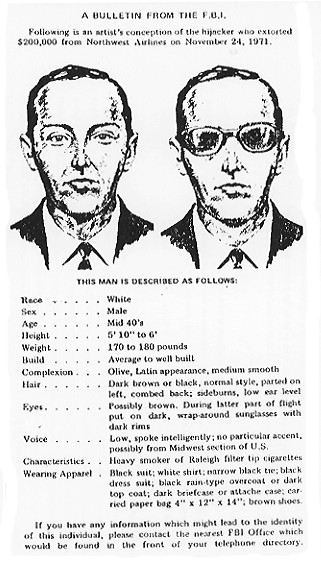
FBI wanted poster for D.B. Cooper ·
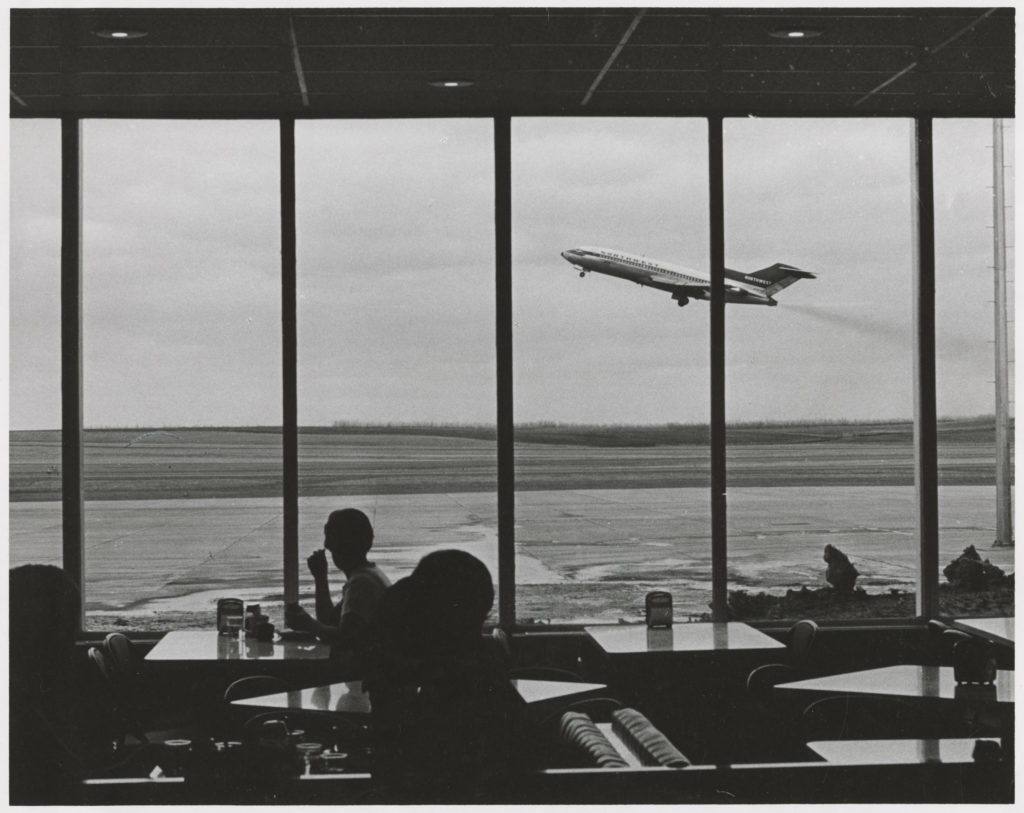
Northwest 727 N467US at Bismarck airport ·
The distinction matters: the supplied record establishes his claim about an explosive device, not a forensic finding that one existed. The threat nevertheless governed the response.
In Seattle, the hijacker received the money and parachutes. Thirty-six passengers were released; several crew members remained aboard. He then ordered another takeoff and directed the crew toward Mexico City. During the leg between Seattle and the scheduled Reno stop, he departed through the aircraft’s rear airstair with a parachute and the ransom.
The FBI’s account places the jump a little after 8 p.m. That is an approximate temporal anchor, not a verified minute-by-minute reconstruction. The available federal summaries do not establish exact times for every intervening action or a precise jump point.
This is the first investigative difficulty: a secure sequence is not a secure map. Landing, exchange, departure and jump can be established without identifying the ground beneath the aircraft at the decisive moment. Any reconstruction that assigns exact minutes throughout risks turning uncertainty into apparent precision.
Even the familiar name is misleading. “D.B. Cooper” arose from an early press error after agents questioned an unrelated man with those initials. The ticket alias was Dan Cooper. Public memory preserved a mistaken identifier while the actual passenger disappeared.
II. The Suspect Matrix & The Alibis
The FBI opened its investigation immediately, naming it NORJAK—Northwest Hijacking. Agents interviewed hundreds of people, examined the aircraft and pursued leads across the United States. By the fifth anniversary, the Bureau reported considering more than 800 suspects, with about two dozen remaining of particular interest.
Those figures measure investigative activity, not proximity to a solution. A large suspect pool can contain repeated resemblance, overlapping biographies and persuasive stories without yielding an identification.
Richard Floyd McCoy Jr. illustrates the distinction. In 1972, he hijacked a United Airlines aircraft and escaped by parachute. The similar method made him a legitimate investigative lead. The FBI nevertheless ruled him out as Cooper for reasons including his failure to match the physical descriptions supplied by Flight 305’s attendants. His conviction concerned his separate 1972 crime.
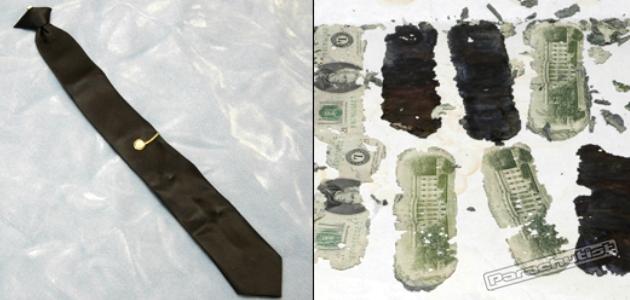
Recovered D.B. Cooper ransom $20 bills · · Publication rights need review
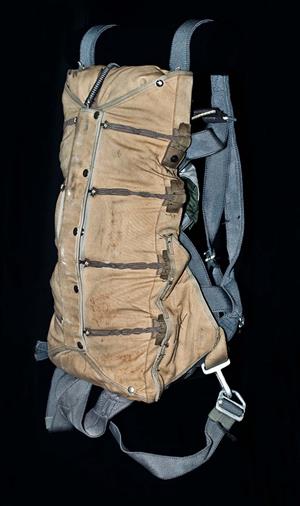
Unused parachute from the D.B. Cooper hijacking ·
Method alone was therefore insufficient. A conspicuous similarity had to survive comparison with witness evidence; in the Bureau’s assessment, it did not.
The supplied summaries do not provide a reliable suspect-by-suspect alibi record. None should be manufactured to complete a tidy matrix. Other publicly proposed names were either eliminated or never charged in the 1971 hijacking. Those are different statuses: absence of a charge is not itself proof of innocence, but neither is public suspicion evidence of guilt.
III. The Evidence Ledger
Exhibit A — The Tena Bar Ransom Bills
Type and recovery: In February 1980, Brian Ingram discovered deteriorating $20 bills totaling $5,800 buried at Tena Bar along the Columbia River.
Initial interpretation: The cash offered a possible physical connection between the hijacking and a specific place—something far more tangible than a reported resemblance or retrospective confession.
What examination established: The FBI matched the bills’ serial numbers to the ransom paid in Seattle. That comparison authenticated the connection. The money was not merely compatible in denomination or age; it belonged to the ransom.
What remained unresolved: The match did not establish when or how the bills reached the riverbank, where Cooper landed, or whether he survived. Recovery location and landing location are not interchangeable. The cash fixed one part of the ransom’s history to Tena Bar, but did not reveal its route there.
Exhibit B — The Initial Suspect Sketch
Type and documentary location: The National Archives describes an initial suspect sketch among the contents of the U.S. Attorney’s case file, CR-0451, for the Western District of Washington. The file is cataloged under National Archives Identifier 325594129.
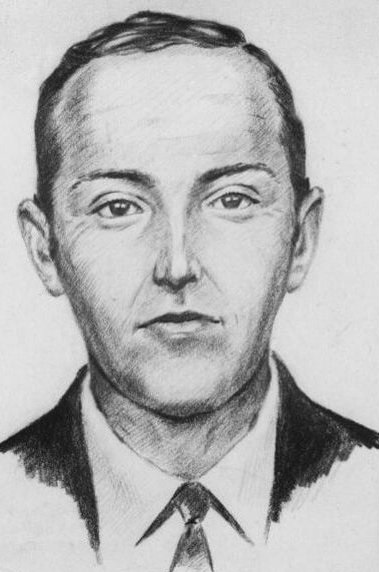
D.B. Cooper initial FBI suspect sketch ·
Initial interpretation: A suspect sketch provides a visual aid for comparing possible identities. Its presence documents an early effort to turn observations into a usable investigative reference.
What the available record establishes: The catalog confirms the sketch’s inclusion, but the supplied summaries do not describe its preparation, revisions or a successful identification arising from it. It cannot be treated as a photograph of the offender or as independent proof against someone who resembles it. Its evidentiary value remains bounded by the observations behind it.
Exhibit C — The Escape-Experiment Records
Type and documentary location: The same archival file contains records of FBI and U.S. Air Force experiments examining how the escape could have been carried out. Federal materials also describe testing involving the aircraft and parachute configurations.
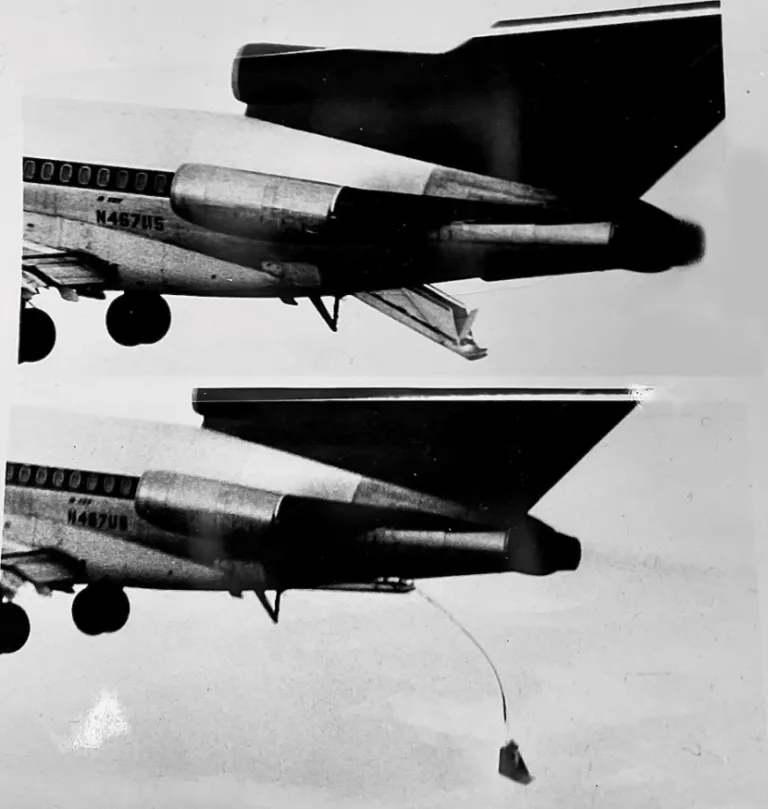
FBI-Northwest Orient 727 sled test photographs · · Publication rights need review
Initial interpretation: These were reconstruction tools: attempts to determine what the equipment and aircraft permitted, rather than assuming that the hijacker’s demands demonstrated expertise.
What technical assessment established: The FBI stated that the parachute he used could not be steered. His clothing and loafers were unsuitable for a rugged night landing in heavily wooded terrain. The Bureau considered the conditions hazardous even for an experienced parachutist and assessed that the available evidence suggested he was not a seasoned professional skydiver.
Limits: The supplied summaries do not connect every assessment to a particular experiment or provide verified search grids and a definitive jump point. Hazard is supported; death is not established.
IV. The Forensic Turning Point
Tena Bar was a major evidentiary development, but it was not a confirmed turning point that solved the case.
The serial-number match answered a narrow question decisively: was this recovered cash part of the ransom? Yes. It did not answer the larger questions that made the discovery so compelling.
That separation is the heart of the case. Authentication identifies an object’s connection to a crime; reconstruction explains its movement. The first was achieved. The second remained incomplete.
Nor could technical assessments close the gap. An unsteerable parachute and unsuitable footwear supported a hazardous-survival assessment, not a verified account of the landing. The money and the equipment findings could constrain theories, but neither supplied the missing person.
There is no confirmed resolution in the supplied record. The strongest physical clue narrowed uncertainty without extinguishing it.
V. The Interrogation & Resolution
The documented investigation involved extensive interviewing. The supplied materials do not establish a decisive interrogation, a verified confession or an admission that identified Cooper. A dramatic interview-room climax would be fiction.
The legal record also requires restraint. An archival U.S. Attorney’s file is not automatically a court docket. The National Archives description does not establish whether a grand jury acted or an indictment was docketed under a particular court number. No one has been tried or convicted for the November 24, 1971 hijacking.
On July 8, 2016, the FBI announced that it was redirecting resources after 45 years of work while remaining receptive to specific physical evidence connected to the parachutes or ransom money. That decision was a reallocation, not a solved-case announcement.
The public archive is itself incomplete: the FBI Vault posting covers investigative records from November 1971 through May 1992 but does not claim to contain the entire file. Its limits should not be mistaken for proof that undocumented events occurred—or that every investigative step is publicly visible.
VI. Investigator's Debrief (Lessons in Deduction)
- The Trap: Do not promote approximate timing into an exact location. The documented flight sequence supports an airborne escape between Seattle and Reno, not a verified landing site. Every additional coordinate requires evidence.
- The Signature: Distinguish a repeatable method from an identifying feature. McCoy’s parachute escape justified comparison, but did not override conflicting witness descriptions. By contrast, matching serial numbers identified the Tena Bar bills as ransom money—without identifying their carrier.
- The Principle: State both the reach and the boundary of each finding. The bills prove a ransom connection to a riverbank; the equipment assessment establishes danger; the archival files document sustained inquiry. None establishes who Dan Cooper was or what happened after he left the aircraft. The case remains cold because those missing links remain missing.